02.10.2025 / Culture as Security by Larissa Babij OCT 11, 2025
Greetings from autumn Kyiv — cold, drizzly, and still the capital of the free world! While I’m gradually coming back to my own writing, I’ve spent most of the past several months editing and translating the writing of others. It’s rewarding work and I’m delighted to present the new issue of the London Ukrainian Review on Culture as Security!
“The pieces in this issue elucidate the relationship between culture, power, and the survival of a political nation at a moment when the stakes for success in this battle could not be higher, not only in Ukraine but around the world,” writes Editor-in-chief Sasha Dovzhyk in her introductory essay. The issue’s authors engage with discourses of imperialism, colonialism, cultural continuity, and authoritarianism, while highlighting Ukrainians’ long tradition of manifesting their sense of civic responsibility through action.
You’ll notice that the authors from Ukraine — Eva Tur, Vasek Dukhnovskyi, Valeriy Puzik, and Kateryna Zarembo — are all participating in their country’s military defense. Listen to the writers and artists who made the decision to physically protect their land and people from Russian invasion if you want to understand what Ukraine can contribute to global discussions around culture as security.
Authors based abroad draw meaningful connections between Ukraine’s continuous fight against tyranny and the rise of authoritarianism around the globe. In conversation with Peter Pomerantsev, Olesya Khromeychuk presents the historic tradition of Ukrainian civic resistance as a counterpoint to worldwide trends towards ceding citizen participation in government to authoritarian strongman leaders. Edward Lucas, Leah Batstone, and Uilleam Blacker address how russia is waging its war against Ukraine in the cultural arena far beyond Ukraine’s borders, and suggest ways to fight back. Maria Sonevytsky’s essay on house keys preserved by Crimean Tatars, Palestinians, and Ukrainians, violently displaced from their homes, provides an important perspective on cultural continuity and endurance in the absence of political security.
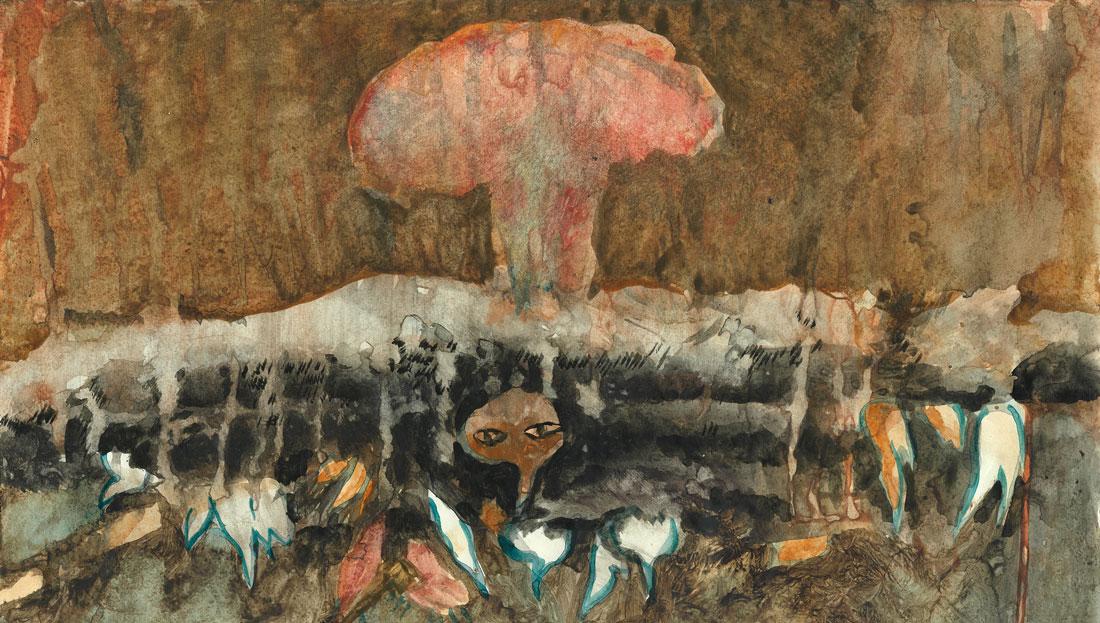
You’ll find space between the diverse essays, poetry, and enchanting artworks and hokkus by Crimean Tatar artist Sevilâ Nariman-qızı for the play of memory and imagination, to generate questions and spark new connections between the challenging issues covered here.
Please take your time and read the journal at leisure. I encourage you to share the publication with your friends, colleagues, and communities, especially folks looking for deeper reflection on the state of Ukrainian culture defending itself from Russian assault in today’s volatile world.