Larissa Babij
Feb 5
In luxurious Lviv, where I’ve been since Sunday morning, I’ve only experienced one power outage. It lasted 2.5 hours.
For comparison’s sake, this is the schedule for my building in Kyiv today.
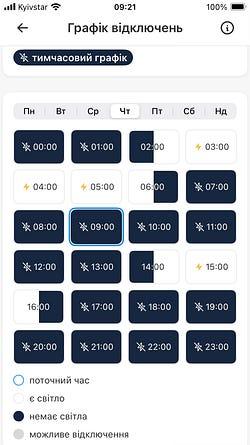
You can read the chart without knowing Ukrainian. Dark is dark and white is light.
For the record, I am thoroughly enjoying this luxury. Warm rooms, hot showers, light at any time of day or night. I’ve come to Lviv so I can fully direct my energies and attention to my computer-based, wordy, intellectual work. (We’re preparing the next issue of the London Ukrainian Review.)
But I can’t un-know what I’ve left behind and that I’ve left behind friends and neighbors in that hell. Now I understand the urge to rescue your friends and loved ones when you have too much comfort for just yourself (but this comfort I’m enjoying for the time being is not exactly mine to give).
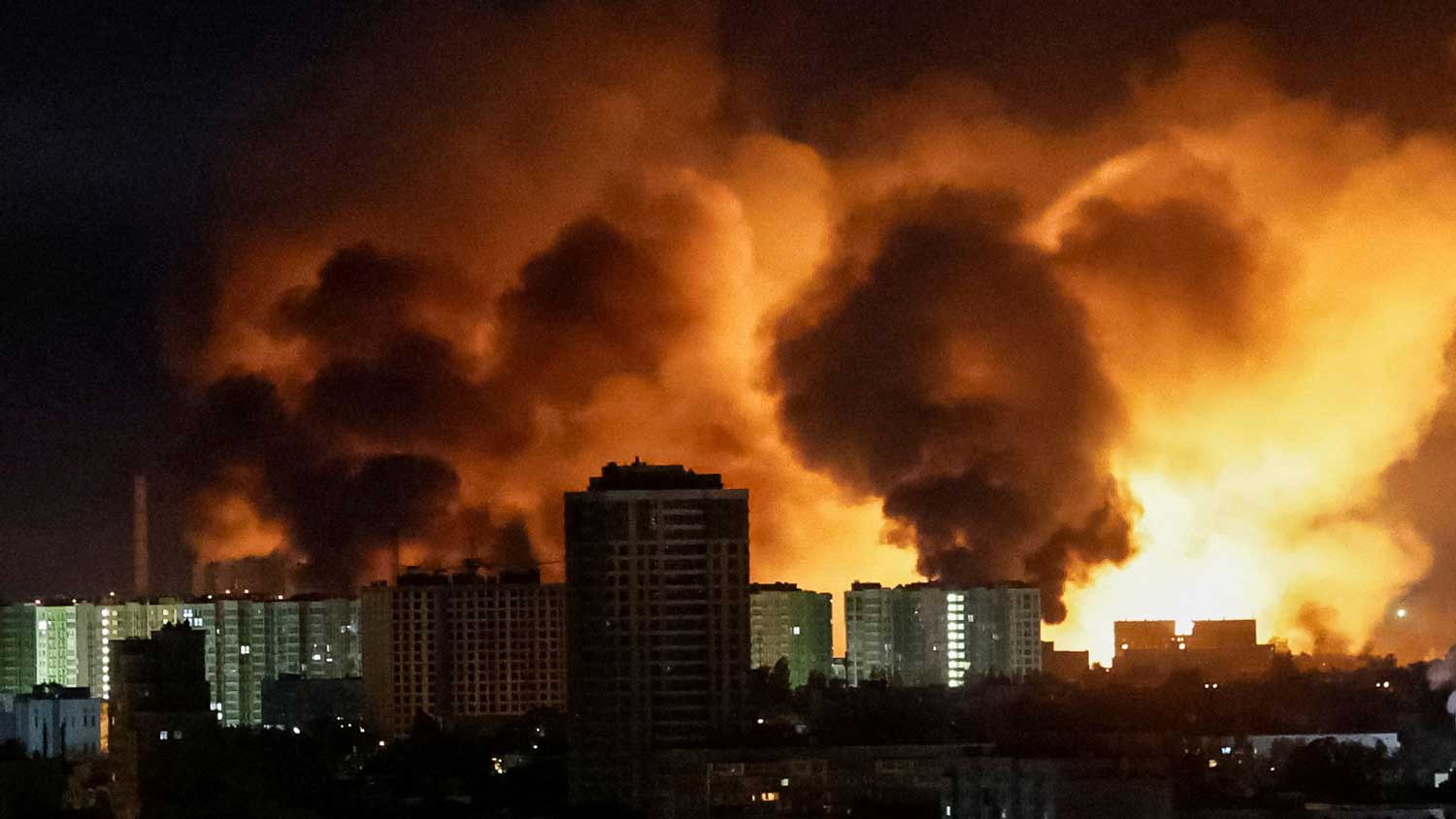
Hell sounds like generators, one after another, clattering on the icy asphalt. Hell has dark, slippery streets, with puddles of dirty slush.
In Hell you wear your winter coat indoors. And three pairs of socks. And gloves with the fingers cut off.
There is Internet in Hell. So you can read the news of courageous Americans murdered, one after another, by US government forces. And you receive messages from loved ones, written from warm, cozy houses, telling you to leave. You laugh and the droplets you exhale from your warm, tired body turn to ice.
There is a train station in Hell, so you can go to Kharkiv or Lviv (or Dnipro or Izium or Odesa). Your train will be two hours late, so you huddle on a bench in the chilly station, clearing the excess messages from your Gmail Inbox. When the train arrives, you’ll enter the nicest sleeping compartment you’ve ever seen, with retro-orange berths and just the right proportions. And it will be warm.
There is laughter in hell. And dancing too. But the moves come ragged, a bit jerky, in fits and starts, there’s not enough time and space to find a groove.
Hell has music, wild and tuneless. Orgiastic drum beats and cries that vaguely resemble the Ukrainian folk songs that everybody knows. The full-throated shouting vibrates through the walls with such intensity that were you enclosed in the same room with the singers your cell walls might burst. A raw uncontrolled release of wailing.
In Hell you can buy a large cappuccino with three espressos for $3. For a little more you can eat the most delicious poppy seed bun you’ve ever tasted and work at your laptop, connected to the Internet, in a well-lit cafe until late in the evening.
People come in and out with their dogs and children and laptops.
Of course there are people in Hell. Here they shed their defenses, that cushion of social propriety, you see each other as you really are. You have to decide what is most important and let the rest go.
When you’re tired you go home, climb the stairs to the seventh floor, and put a pot of water on the stove.
As long as I have running water and a functional gas stove, I’m alright.
I have a group of girlfriends who live in my building. We are five middle-aged (on average) ladies who periodically get together around a table laden with food to drink and talk and laugh. We share stories from our respective pasts and scheme about how to improve the conditions in our three-building co-op, as well as the work of its governing board (which I am on).
Two of the women, like me, have been spending periods of time outside the city to warm up. While the other two, who have office jobs in Kyiv, have stayed in our frigid building the entire time, trying various ways to keep warm and keep their spirits up.
We all got together the evening before I left for Lviv. Over salads and stuffed peppers, with wine and whiskey, we talked for hours about power inverters, batteries, and uninterruptible power supplies. How does each of us use the Internet at home when the power is out? What appliances can you run off a battery with 5 watt-hours? What is the minimum number of watt-hours you need to run the building’s heating system pumps? And how long will they keep the water circulating?
No matter where I’ve been over the past month (and now from Lviv), I participate in the continuous discussion among the members of the co-op board (and resident activists) as we try to get through the winter, keep the buildings’ heating pipes from freezing (which has happened in several buildings in my neighborhood, and more throughout the city), and maintain our sanity. There is state funding available to buy equipment like batteries, inverters, and generators, but the market is largely depleted. The greatest deficit in our motley group of graying activists is in relevant skills and experience working with these power-generating and storing technologies.
It seems ridiculous that we are the ones responsible for the livelihood of our buildings, given our lack of qualifications. But just like the artist–activists occupying the basement of the Ministry of Culture in the winter of 2014, who set about trying to draft a national culture policy for Ukraine and build a new, non-Soviet infrastructure for supporting cultural production, we seem to be the only ones who care enough.
“Lviv is a city full of people who are just passing through”, said the cab driver who picked me up at the train station on Sunday morning.
“They live for today, because who knows whether they’ll still be here tomorrow. They just need services. And somebody else to provide them.”
A flash of insight: Kharkiv, Ukraine’s eastern stronghold, which has been mercilessly bombed by russia for the past four years, is admired throughout the country for the resilience and industriousness of its citizens and municipal workers. Stories about how quickly they clean up after each russian airstrike, about the flowerbeds blooming in the city center, about the city policy to replace windows that were shattered by airstrikes instead of leaving the burden on the owner, circulate as reproofs of how other cities manage.
I think of my neighborhood community in Kyiv, the gravitational force that tempts me to choose home over comfort, and about how many people are enduring cold and darkness to keep living at home. When you decide to stay then it’s only natural that you put energy and attention into taking care of where you live. You have to learn to get along with your neighbors in order to live together. Not just survive, not consume and dream, but to live at home.
Does the modern world understand what it means to live at home, in a complex balance of cooperation and defense? This simple and profound thing is what Ukrainians are fighting for, still, and in doing so demonstrating how it is possible.
PS You can bring warmth and support to Ukraine’s defenders by helping my colleague Yuliia Kishchuk buy heating equipment for the 57th Motorized Brigade, where her friend, poet and theatre critic Oleksii “Nemo” Palyanychka, serves as a drone pilot. Donate via PayPal (note: Nemo) or credit card.
PPS I am deeply grateful to my friends Sasha Dovzhyk and Natalie Nougayrede for a warm welcome in Lviv. These brilliant women, who know mobility intimately, are building institutions and networks with roots in Lviv that nurture and support a variety of writers, artists, veterans, researchers passing through the city and make one feel at home.
a Kind of Refugee is a reader-supported publication. To receive new posts and support my work, consider becoming a free or paid subscriber.
Shared via Creative Commons.